

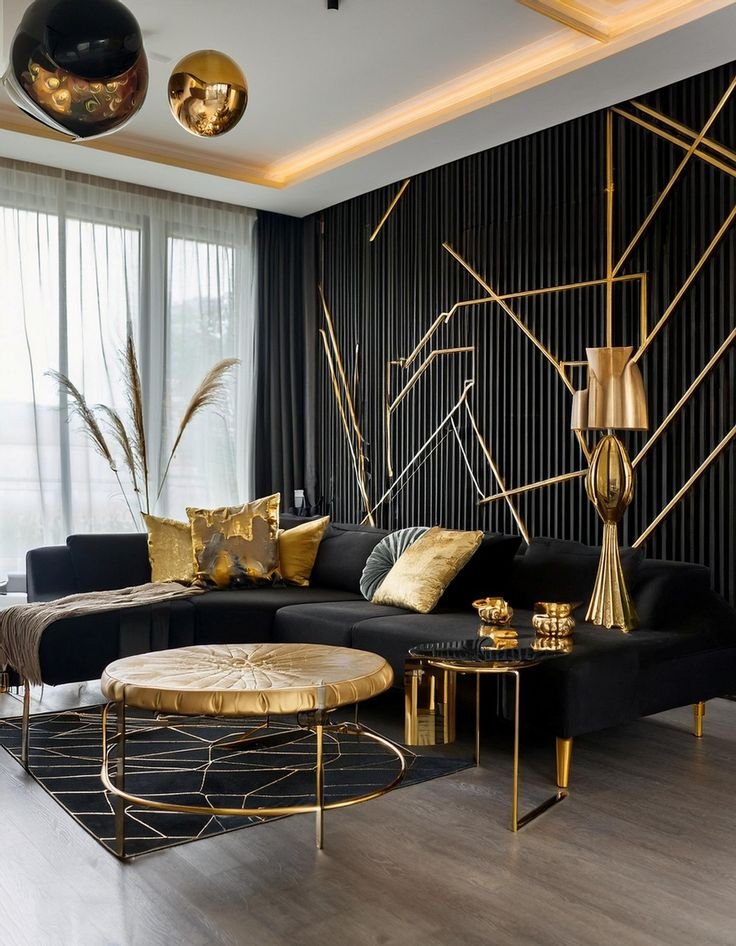
Sustainability in furniture design is often discussed in terms of materials and finishes, but in practice, longevity is what truly defines whether a product is sustainable or not. Furniture that looks good on day one but weakens, corrodes, or loses relevance within a few years quietly becomes waste. The most responsible furniture is the kind that does not need replacing.
This is where metal fabrication plays a decisive role. Not as a trend, not as a decorative choice, but as a structural discipline that determines how furniture behaves over time. At Blackrock Evolutions, fabrication is treated as the foundation of durability rather than a manufacturing afterthought. The idea is simple: if the structure is right, everything else lasts longer.
That thinking has become increasingly important as demand grows for Outdoor Metal Furniture, refined PVD Coated Furniture, and high-quality aluminium fabrication work in Ahmedabad, where design expectations are rising alongside performance requirements.
Longevity Is the Most Practical Form of Sustainability
There is a quiet truth in furniture manufacturing that rarely makes it into marketing conversations. A chair that lasts fifteen years is more sustainable than one marketed as “eco-friendly” but replaced every three. Durability reduces consumption automatically. It lowers raw material extraction, manufacturing energy, logistics movement, and disposal waste without needing justification.
Metal fabrication supports this kind of sustainability because it creates predictable outcomes. Metals behave consistently. When properly fabricated, they do not surprise you later with hidden weaknesses. Heavy load bearing capacity, thermal moments and environmental response can all be controlled.
This predictability allows interior designsigners and furniture manufacturers to commit to sustainable performance furniture instead of short-term, trendy and good appeal.
Why Fabrication Quality Matters More Than Material Choice Alone
Two furniture pieces can use the same metal and still perform very differently. The difference lies in fabrication.
Poor joint design, rushed welding, uneven thickness, or careless surface preparation will shorten the life of even the best material. On the other hand, thoughtful fabrication can make relatively lightweight structures perform exceptionally well for decades.
Good fabrication is rarely visible at first glance. It reveals itself slowly, through furniture that does not loosen, crack, or lose alignment over time. That is why experienced designers tend to trust fabrication quality more than surface aesthetics when evaluating long-term sustainability.
Outdoor Metal Furniture and the Reality of Exposure
Outdoor furniture is where fabrication discipline is tested most brutally. Heat, rain, dust, pollution, and constant use expose every weakness in design. Materials that perform well indoors often fail outdoors simply because they were never engineered for continuous exposure.
Outdoor Metal Furniture fabricated with aluminium or treated steel holds up because it does not rely on coatings alone for protection. The structure itself resists deformation, moisture retention, and fatigue. When drainage, weld placement, and expansion gaps are considered during fabrication, furniture ages predictably instead of deteriorating suddenly.
This reliability reduces maintenance cycles. Less repainting, fewer replacements, and minimal structural repair over time all translate into lower environmental impact, even if that impact is rarely measured directly.
PVD Coated Furniture and Finish Longevity
Finishes are often the weakest link in furniture lifespan. Even strong structures lose perceived value when surfaces scratch, fade, or oxidize. This is why PVD Coated Furniture has gained attention among manufacturers who care about long-term performance, not just visual appeal.
PVD finishes bond at a molecular level. They are not cosmetic layers applied to hide imperfections. When used correctly, they protect the surface from abrasion and corrosion without altering the material’s behavior.
From a sustainability perspective, the biggest advantage of PVD is not its appearance but its endurance. Furniture that retains its finish does not require refinishing, recoating, or early replacement. Over time, that stability matters far more than initial cost differences.
Aluminium Fabrication Work in Ahmedabad: A Practical Shift, Not a Trend
Ahmedabad’s role in aluminium fabrication has grown steadily, not because of hype, but because the ecosystem supports real production needs. Skilled fabricators, improving machinery, and a better understanding of design intent have changed how aluminium furniture is built.
Aluminium’s natural resistance to corrosion and its recyclability make it well-suited for long-life furniture. When fabrication is handled locally, the advantages compound. Shorter supply chains reduce emissions. Direct collaboration improves accuracy. Mistakes are caught earlier.
Aluminium fabrication work in Ahmedabad today is less about volume and more about control. Control over tolerances, finishes, and structural consistency is what enables sustainability in a practical sense.
Fabrication Work in Ahmedabad Has Matured with Design Thinking
Fabrication work in Ahmedabad has moved beyond execution-only roles. Fabricators now influence design decisions by highlighting what will last and what will fail over time.
This shift matters. When fabrication constraints are addressed early, furniture designs become simpler, stronger, and easier to maintain. Over-designed joints disappear. Excess material gets eliminated. The result is furniture that feels refined without being fragile.
Sustainability improves not because of ideology, but because inefficiency is removed.
Repairability Is an Overlooked Sustainability Advantage
One of the most underrated benefits of metal fabrication is repairability. Metal does not become obsolete when damaged. It can be reinforced, re-welded, resurfaced, or modified.
Furniture designed with this in mind stays in use longer. A damaged section does not mean disposal. It means intervention. Over time, this capability dramatically reduces waste, especially in commercial and outdoor environments.
Fabricated metal furniture supports a mindset of maintenance rather than replacement, which is where sustainable design quietly succeeds.
Transparency Builds Trust in Sustainable Manufacturing
Sustainability claims are increasingly questioned, and rightly so. What builds trust is transparency in materials, processes, and fabrication standards.
Manufacturers who understand their fabrication deeply can explain why their furniture lasts. They do not rely on vague environmental language. They rely on engineering logic, material behavior, and performance history.
This clarity matters when architects, developers, and designers are making long-term decisions.
A Long-Term Perspective on Furniture Design
Furniture that lasts does more than reduce waste. It builds continuity in spaces. It ages alongside architecture. It avoids the cycle of constant replacement that quietly drains resources.
At Blackrock Evolutions, metal fabrication is treated as a long-term commitment rather than a production step. Structural integrity, material behavior, and finish endurance are considered together, not separately.
When furniture is designed to endure, sustainability becomes a natural result, not a marketing promise.