

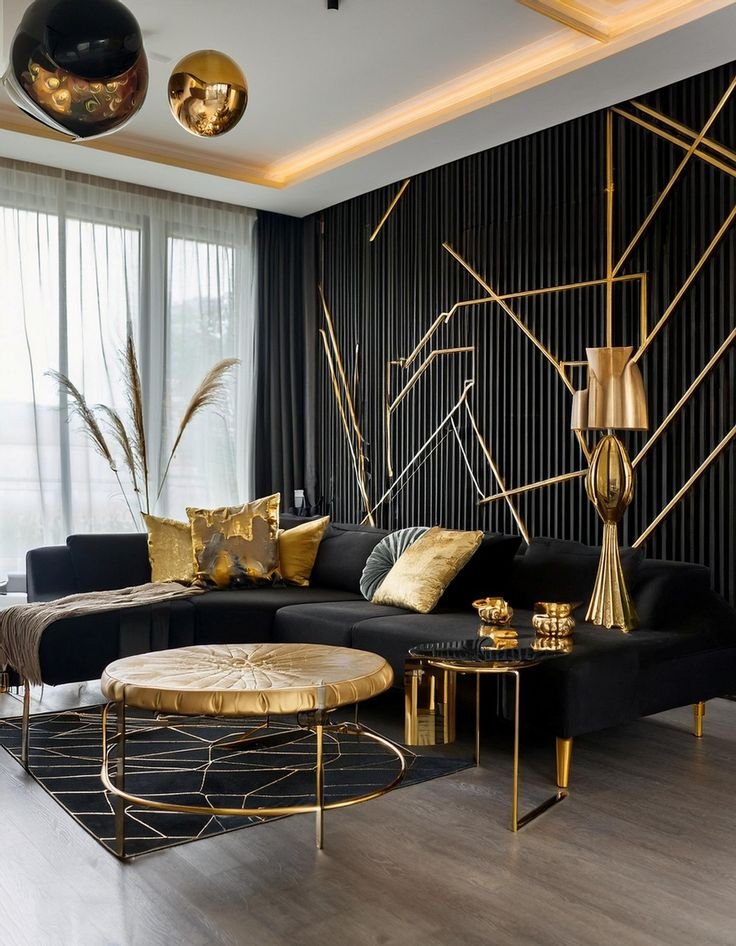

Furniture doesn't sit in isolation anymore — not in serious interior design, anyway. Surface, texture, material, finish, light: they all pull in the same direction, or they don't, and you can tell the difference the second you walk into a room. Among the premium finishes architects reach for today, PVD coated furniture has carved out a real place in luxury homes, corporate offices, hotels, showrooms, and hospitality spaces. Durable. Sharp-looking. Metallic in a way that photographs well and holds up in person. But here's the catch: even a flawless PVD finish can look ordinary if nobody thought about the lighting around it.
That gap — between lighting for PVD coated furniture and the finish itself — gets skipped over more often than it should. Light isn't neutral. It decides how a colour reads, how a reflective surface talks to the room around it, and honestly, how expensive something looks. A gold reception desk, a bronze dining table, a black titanium partition — none of them look like much under the wrong bulb. Under the right one, they become the thing people notice first.
At Backrock Evolution, we're a PVD coating manufacturer working out of Ahmedabad, and most of our conversations with architects and designers eventually land on this exact point: the coating is only step one. Getting the lighting right afterward is what keeps a PVD surface looking like it's worth what it cost, years down the line.
Why Lighting Matters for PVD Coated Furniture
Light changes how material feels to us — that's not really up for debate. What's less obvious is how much more PVD-coated metal responds to it compared to, say, a painted or laminated surface. Move a lamp a few degrees and watch what happens to a brushed metal panel. Small shifts in texture and tone suddenly show up. That responsiveness is a big part of why the finish feels so refined in the first place.
It's also why lighting effects on PVD coated surfaces get discussed early in most luxury projects, not tacked on at the end. Get the lighting layout right and decorative stainless steel furniture looks warmer, richer, more alive. Get it wrong and the same piece can look flat — dull, even, which sort of defeats the point of choosing PVD over a cheaper finish to begin with.
Designers who've been burned by this before don't separate lighting decisions from material decisions. They plan them at the same table, so to speak. The goal is always some kind of balance between how reflective the PVD finish is and how intense, how directional, how warm or cool the light hitting it happens to be.
Understanding the Reflective Nature of PVD Finishes
What makes PVD coating stand out is consistency — a clean metallic surface with none of the patchiness you sometimes get with painted finishes. Paint tends to absorb light in a fairly flat, predictable way. PVD doesn't. It bounces light back in a way that adds real dimension to a surface.
A polished PVD finish catches light and turns it into soft highlights, not the harsh glare you'd expect from, say, chrome under a fluorescent tube. Brushed finishes go even further — light spreads out more evenly across them, giving a quieter, more understated look. That range is exactly why PVD works in such different settings, from a stripped-back office to a five-star lobby.
And because the colour doesn't drift or fade with time, these light-reactive qualities stay consistent year after year. That consistency is a big reason people go looking for a reliable PVD furniture supplier in the first place — nobody wants a finish that looks great on day one and washed-out three years later.
How Lighting Enhances PVD Coated Furniture
If you're wondering how lighting enhances PVD coated furniture, the short version is: it doesn't just light the piece up, it reveals it. Depth, edges, undertones you wouldn't otherwise notice — light pulls all of that forward. Walk past a well-lit PVD surface and it doesn't stay the same; it shifts, catches differently depending on where you're standing. That small bit of movement is what gives a room its sense of polish.
You notice this most in boardrooms, hotel lobbies, upscale retail, premium homes — places where furniture has stopped being purely functional and started doing double duty as part of the architecture.
At its core, though, this is a balancing act. Too much brightness and a reflective surface just overwhelms the eye. Too little and you lose the depth that made you choose PVD in the first place. Somewhere in between is where the finish actually gets to shine — without stealing the whole room.
Choosing the Best Lighting for PVD Finish
Finding the best lighting for PVD finish isn't just about picking a fixture that looks nice in the showroom. Colour temperature, beam angle, brightness, placement — all of it matters, and it all shows up differently depending on the time of day.
Warm white lighting — think 2700K to 3000K — tends to bring out the best in gold, bronze, and champagne finishes. You'll see this a lot in luxury homes, boutique hotels, fine dining spaces, anywhere comfort is the priority over anything sharp or clinical.
Neutral white lighting, somewhere around 3500K to 4000K, is the safer middle ground. Works across a wider range of finishes, which is probably why it shows up so often in corporate offices and reception areas that want to feel modern without feeling cold.
Cool white lighting — 5000K and above — gives you a sharper, more technical look. Fine for industrial spaces. Less fine for anything trying to feel warm or expensive, since cool light tends to strip away exactly the richness that made someone choose PVD over a plainer finish. Most designers use it sparingly, if at all, in premium interiors.
Bottom line: what works for PVD coated furniture depends on the mood you're going for, the specific finish, and where the piece actually lives.
Does Lighting Affect the Colour of PVD Coating?
People ask this a lot: does lighting affect PVD coating colour? Not really, no — not the coating itself. PVD is known for holding its colour, resisting fade, all of that. What changes is perception. How your eye reads that colour shifts depending on what's lighting it.
Put a gold PVD finish under warm light and it reads deeper, richer. Swap in cooler light and the same piece can look brighter, a bit thinner in tone. Bronze does something similar — darker under a hard directional spot, softer and more textured under diffused light.
That's part of why good designers actually test lighting samples next to the furniture finish before signing off on anything. It's not an afterthought for them. It's part of the spec.
Why Luxury Designers Choose PVD Furniture in Premium Interiors
Across five-star hotels, executive offices, luxury homes, and high-end retail, PVD coated furniture has basically become shorthand for quality. And it's not just about durability, though that helps. It's about how the finish behaves under light — how it makes a space feel current without feeling trendy in a way that dates quickly.
Architects like it because it plays well with other premium materials — stone, timber, glass. It adds contrast without dominating, and its reflectivity can genuinely make a room feel bigger and brighter than it is.
Which is really the whole point of using PVD furniture in luxury interiors: good design isn't one material working alone, it's how materials, light, and space talk to each other. When that conversation works, furniture stops being background and becomes part of the experience.
As a PVD coated furniture manufacturer and PVD furniture supplier, Backrock Evolution works alongside architects and developers to get that conversation right — engineering precision on one side, lasting visual appeal on the other. Get the lighting right too, and decorative stainless steel furniture stops being just a product and starts being a feature of the room.
Best Lighting for Gold, Bronze, Black Titanium and Other PVD Finishes
Every PVD finish has its own personality, more or less, and lighting is what brings that personality out. Good designers don't light every metallic finish the same way — they adjust based on colour temperature and reflectivity, finish by finish.
Gold PVD Furniture
Gold's still the finish everyone asks for first — it just reads as luxury, warmth, permanence. Warm white LED in the 2700K–3000K range is usually the move here. It softens things, pulls out the richness without turning the piece into a mirror.
In hotels, homes, boutiques — warm light lets gold sit comfortably next to marble, walnut, natural stone, textured fabric, without looking like it's trying too hard. Instead of a hard shine, you get depth that shifts as you move past it. That's basically the whole formula behind best lighting for gold PVD furniture: warm ambient light, plus a bit of accent lighting placed with intent.
Bronze and Champagne PVD Finishes
Bronze and champagne bring warmth minus the brightness of polished gold. They tend to do best under layered lighting — ambient light setting the overall tone, focused light picking out specific details.
A common trick: LED strips tucked under cabinetry or floating shelves, so bronze elements pick up light naturally instead of being hit head-on. You get a glow, not a glare. The furniture blends into the architecture rather than sitting on top of it.
Bronze absorbs a bit more light than brighter finishes do, so the balance matters more here — too little light and it just disappears into the shadows.
Black Titanium PVD Furniture
Black titanium has become a favourite in executive offices, upscale retail, contemporary homes — anywhere understated reads as more expensive than flashy. Dark finishes soak up light, sure, but light them right and the texture really comes through.
Skip the harsh spotlights. Neutral white ambient light plus subtle wall-washing tends to do the job better — brings out the metallic texture without the glare. Keeps the finish looking premium instead of muddy.
Pair it with stone, smoked glass, or timber and you get something that feels modern now and probably still will in ten years.
Integrating Lighting and PVD Furniture into Luxury Interior Design
Nobody builds a great interior out of expensive materials alone. It's the coordination — materials, lighting, proportion, detail — that actually does the work.
Which is why PVD coating and lighting design have basically become one discipline in the hands of good architects. Furniture isn't a standalone product anymore; it's something that has to hold up under daylight, ceiling fixtures, decorative lighting, and whatever else the room throws at it across a full day.
A brushed gold reception desk under cool commercial lighting looks like a different object entirely compared to the same desk under warm architectural lighting. Decorative stainless steel wall panels can look elegant under indirect light and harsh under a bank of overhead fluorescents. Same material, completely different result.
Factor lighting in early, and PVD elements end up supporting the whole space instead of fighting it.
How Different Interior Spaces Benefit from PVD Furniture and Lighting
Lighting should follow function, basically. An office doesn't need what a hotel needs. A retail floor doesn't need what a private home needs. The lighting around PVD furniture should shift accordingly.
In offices, neutral white light keeps things professional while still letting brushed gold or bronze pieces add a bit of warmth without pulling focus. Reception areas usually do best with layered lighting — general ceiling light plus discreet accents on the details that matter.
Hotels tend to go softer. Warm, indirect lighting flatters decorative stainless steel furniture and statement reception counters, and it reinforces that sense of exclusivity hospitality brands are usually chasing.
Retail is its own animal — lighting there is meant to grab attention, not just flatter a finish. Spotlights aimed at display furniture and metal fixtures turn PVD surfaces into something closer to a billboard, in a good way, reinforcing whatever the brand is trying to say.
Even in homes, more people are specifying PVD furniture now, because the right lighting can turn a fairly ordinary piece into something closer to a sculptural centrepiece.
Common Lighting Mistakes That Reduce the Beauty of PVD Furniture
PVD is forgiving in a lot of ways, but lighting mistakes still show up fast.
Overhead lighting used on its own, cranked too bright, is probably the most common one. It creates reflections that are more annoying than flattering and buries the subtle texture that's supposed to be the whole point. Layered lighting almost always beats a single overhead source.
Ignoring colour temperature is another. Cool light on a warm gold or bronze finish just flattens it — makes it look cheaper than it is. Dark finishes have the opposite problem: not enough contrast and they lose all their depth.
Daylight gets ignored too, more often than you'd think. It changes constantly through the day, so furniture really should be checked under both daylight and artificial light before anything gets finalised. Skip that step and you might end up with a finish that looks great at 10am and off by 4pm.
And fixture placement — small thing, big impact. A spotlight aimed wrong creates a glare spot nobody wants. Adjust the angle, mix in some accent lighting, and the problem usually disappears.
Decorative Stainless Steel Sheets and PVD Furniture: Creating a Unified Design Language
A lot of luxury interiors now pair decorative stainless steel sheets with PVD furniture to keep the whole space visually consistent. Wall cladding, lift surrounds, columns, shelving, custom furniture — same finish running through all of it.
Lighting is what actually ties that together. Done well, it creates a thread between the vertical surfaces and the horizontal furniture pieces, so the space reads as one idea instead of a collection of separate decisions.
It's also why architects tend to loop in an experienced PVD coating manufacturer early in the spec process — colour accuracy, finish consistency, lighting compatibility, all of it has to line up, or the whole thing starts to look disjointed a year or two in.
Frequently Asked Questions
1. What is PVD coated furniture, and why is it popular in luxury interiors?
It's furniture finished using Physical Vapour Deposition — a coating process that produces a durable, metallic surface. Popular because it looks elegant and holds up against scratches, corrosion, and everyday wear far better than most alternatives. Designers also like that it doesn't lose its look over time.
2. How does lighting enhance the appearance of PVD coated furniture?
It brings out reflectivity, texture, and metallic depth that would otherwise go unnoticed. Good ambient-plus-accent lighting turns decorative metal furniture into a genuine focal point, without letting it overpower everything else in the room.
3. Which type of lighting is best for PVD coated furniture?
Depends on the finish. Warm white generally suits gold, bronze, and champagne. Neutral white works for most contemporary commercial spaces. Cool white gets used sparingly, mostly for specific effects. Layered lighting beats a single light source almost every time.
4. Does the colour of lighting affect the look of PVD finishes?
Yes, even though the coating itself doesn't fade or shift. Warm light deepens gold and bronze tones; cooler light makes the same finish look brighter and thinner. Good designers test both together before finalising anything.
5. Why do architects and interior designers choose PVD coated furniture for premium commercial projects?
Mostly durability plus flexibility. It pairs well with marble, glass, timber, and stainless steel, and it holds up in spaces that see a lot of foot traffic. Paired with the right lighting, it helps a commercial interior feel considered rather than generic.
Bringing Design, Durability and Lighting Together
No single material makes an interior feel expensive. It's the combination — material, light, architectural detail, spatial planning — all working in the same direction.
PVD-coated furniture is a decent case study in that idea. Durable, premium-looking, and genuinely responsive to light in a way cheaper finishes just aren't. Get the lighting right and you pull out the full richness of the finish — the craftsmanship behind it actually shows.
As a PVD coating manufacturer and PVD furniture supplier, Backrock Evolution works with architects, designers, and developers who care about getting that combination right — precision on the engineering side, judgment on the design side. Bespoke furniture, decorative stainless steel sheets, architectural metal finishes — whatever the project calls for, pairing solid PVD coating with smart lighting is what makes the difference between furniture that looks fine and furniture that actually holds attention.