

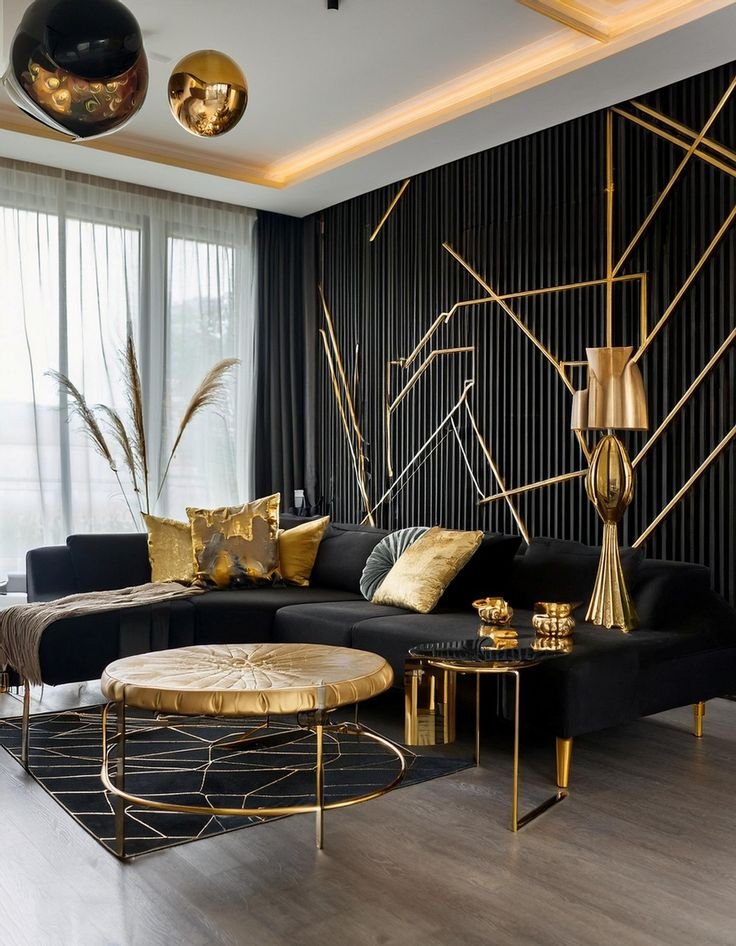

Walk through any newly built commercial complex or upscale residential project in Ahmedabad today, and one thing becomes immediately obvious — aluminium is everywhere. From sleek office facades to elegant balcony railings, from airy pergolas to modular partitions, this metal has quietly become the backbone of contemporary construction across the city.
And the reasons are not hard to understand.
Builders, architects, and property owners are making a decisive shift away from conventional iron and heavy steel structures. They want materials that are lighter, smarter, and built for the long haul — materials that look premium on day one and continue to look that way five, ten, and fifteen years later. Aluminium fabrication delivers exactly that, and the surge in demand for aluminium fabrication work in Ahmedabad is a direct reflection of how fast the city's design sensibilities are evolving.
Why Aluminium Has Earned Its Place in Modern Construction
There is a reason aluminium has moved from a niche material to an industry standard in such a short span of time. It is not just about weight savings, although that matters enormously. It is about the complete package — strength, adaptability, finish quality, and long-term performance all combined in one material.
Compare aluminium to traditional steel in a real project scenario. Steel is heavier, prone to corrosion without regular treatment, and difficult to rework once installed. Aluminium, by contrast, is roughly one-third the weight of steel, naturally resistant to rust, and remarkably easy to cut, shape, weld, and finish. Whether you need it powder coated in matte black, anodized in silver, or finished with a realistic wood texture, aluminium accommodates virtually any design direction.
For Ahmedabad specifically — a city with sharp summer temperatures, occasional humidity, and year-round dust — this kind of weather resilience is not just a bonus, it is a necessity. Structures that would require frequent painting or maintenance under normal circumstances tend to hold up far better in aluminium.
Here is a quick summary of why architects and developers keep coming back to aluminium:
Significantly lighter than steel, reducing structural load
Naturally corrosion-resistant without additional chemical treatment
Compatible with premium surface finishes including powder coating, anodizing, and PVD
Easy to customize for unique architectural requirements
Environmentally responsible — highly recyclable at end of life
Performs reliably in both indoor and outdoor environments
Low maintenance across its operational lifespan
Aluminium Fabrication Is Reshaping Ahmedabad's Skyline
The city has changed dramatically over the last decade. Corporate campuses, premium housing societies, large retail developments, five-star hospitality projects, and modern industrial parks have all raised the bar for what construction quality and aesthetics need to look like. Ordinary structural solutions no longer cut it.
This is why fabrication work in Ahmedabad has expanded so significantly in both scope and sophistication. Aluminium is now a core material across virtually every sector of the built environment.
In commercial buildings, aluminium is the material of choice for external facades, curtain wall systems, entrance canopies, decorative louvers, interior partitions, and modular ceilings. These elements define how a corporate space is perceived before a client even walks through the door.
In residential developments, homeowners are moving past the standard iron grille and painted steel options of the past. Premium aluminium railings, pergolas, retractable sunshade systems, modular gate structures, and decorative wall panels have become common features in upscale housing projects.
In hospitality, hotels, restaurants, and luxury resorts depend on aluminium fabrication to create the kind of immersive, design-forward environments that attract today's experience-driven guests. The material's ability to support premium surface finishes makes it particularly valuable in high-touch interior settings.
In industrial and commercial warehousing, the practical benefits of aluminium are equally compelling. Lightweight aluminium structural systems reduce construction timelines, simplify installation, and perform well in semi-open environments where moisture and dust are constant factors.
The Structural Logic of Going Lightweight
Beyond aesthetics, there is solid engineering reasoning behind the aluminium preference.
Every kilogram of dead load added to a building's structure translates into increased foundation requirements, heavier beams, and higher overall construction costs. When you replace heavy steel or concrete systems with lightweight aluminium equivalents, you reduce stress on the structural frame — which opens up design possibilities that would otherwise require expensive reinforcement.
This is especially relevant for rooftop installations, elevated terraces, and high-rise building facades, where managing structural loads is a critical engineering concern. Aluminium lets designers work with larger panel sizes, bolder architectural gestures, and more complex geometries without overburdening the building below.
It also translates into faster, safer installation. Lighter components mean less heavy lifting equipment, shorter installation windows, and reduced on-site risk. For project managers working with tight timelines, this efficiency advantage is anything but minor.
Common applications where the lightweight advantage proves decisive include:
Terrace pergolas and shade structures
Architectural screens and privacy panels
Modular office partition systems
Decorative wall cladding and facades
Balcony enclosures and railing systems
Sunshade louvers and canopy frameworks
Rooftop structural installations
Outdoor Metal Furniture: Where Fabrication Meets Lifestyle
The concept of "outdoor living" has taken on new meaning for Indian property owners over the last few years. Rooftop gardens, poolside lounges, terrace dining areas, and private outdoor retreats have become real priorities — not just aspirational add-ons — in both residential and commercial projects.
This shift has created strong demand for high-quality outdoor metal furniture that can withstand exposure to sun, rain, humidity, and dust without losing its structural integrity or visual appeal.
Aluminium is ideally suited to this application. Unlike conventional iron furniture, which rusts progressively and requires frequent repainting, aluminium-based outdoor furniture holds its finish and its shape across years of outdoor exposure. It is also light enough to rearrange easily — a practical advantage for spaces that serve multiple functions.
Some of the most popular aluminium outdoor furniture applications in premium projects today include:
Garden and landscape seating — Clean-lined aluminium benches and seating systems designed for residential gardens, commercial landscapes, and civic outdoor areas.
Rooftop lounge setups — Hotels, clubs, and residential towers commonly invest in custom-fabricated lounge furniture that balances visual sophistication with functional durability.
Poolside furniture — Corrosion resistance near water-exposed environments makes aluminium the default material choice for any poolside installation.
Customized architectural outdoor furniture — High-end projects increasingly integrate fabricated outdoor furniture with ambient lighting, built-in planter systems, and coordinated metalwork for a fully designed outdoor environment.
For projects at the premium end, aluminium outdoor furniture is often paired with PVD coated furniture finishes to achieve a luxury-grade appearance that holds up exceptionally well over time.
Why PVD Coating Is Transforming Metal Surface Quality
Surface finish is no longer an afterthought in modern fabrication. Clients — whether residential buyers, commercial developers, or hospitality operators — expect metal systems and furniture to maintain their appearance for years without fading, peeling, or showing signs of surface degradation.
This is where PVD coated furniture has become a genuine differentiator in the premium market.
PVD, or Physical Vapor Deposition, is a vacuum-based surface treatment technology that deposits an ultra-thin, extremely hard metallic coating onto the base material. The resulting finish combines exceptional aesthetic richness with properties that far exceed conventional powder coating in terms of scratch resistance, UV stability, and corrosion protection.
For context, a PVD-coated surface is harder and more durable than most standard paint or powder-coat finishes, which makes it particularly valuable in high-traffic environments or outdoor settings where surface wear is a constant factor.
The finish options available through PVD include gold, rose gold, matte black, bronze, black titanium, champagne, and various brushed metallic textures — each offering a genuinely premium appearance that reads immediately as high-end.
When aluminium fabrication is paired with PVD coating, the result is a product that is as functional as it is visually refined. This combination is increasingly the standard for luxury commercial interiors, five-star hospitality projects, and premium residential developments.
What Separates Premium Fabrication From Average Work
Not all aluminium fabrication delivers the same outcome. Two projects can use the same material and still produce dramatically different results depending on the skill, equipment, and quality standards of the fabrication partner.
The visible difference usually shows up in the finishing details — how clean the joints are, how consistent the surface treatment looks, whether the powder coating has any orange peel texture or uneven coverage, how precisely the structural connections align. These differences might seem cosmetic, but they reflect deeper differences in process quality that also affect structural performance and long-term durability.
When evaluating providers for aluminium fabrication work in Ahmedabad, the following factors typically separate genuinely capable fabricators from those who simply offer lower pricing:
Material sourcing and grade selection — The mechanical properties and longevity of aluminium fabrication depend heavily on material grade. Certified structural-grade aluminium performs very differently from commodity stock.
Engineering precision — Accurate cutting tolerances, properly prepared weld joints, and consistent bend radii all contribute to how well fabricated structures perform over time.
Surface treatment quality — Powder coating, anodizing, and PVD finishing all require proper surface preparation, calibrated application conditions, and quality control at each stage. Skipping steps here shows up as premature failure later.
Customization depth — Modern architectural projects rarely fit standard fabrication templates. A capable fabrication partner can work from architectural drawings, adapt to site conditions, and engineer solutions tailored to the specific project.
Installation expertise — Even a perfectly fabricated product can fail in service if installed incorrectly. Proper anchoring, alignment, and on-site finishing are essential parts of the quality equation.
Brands like Blackrock Evolutions have built a strong reputation in Ahmedabad's market by consistently delivering on these quality dimensions — combining advanced manufacturing infrastructure with genuine customization capability and premium finishing technologies.
Current Trends Shaping Aluminium Fabrication in Ahmedabad
The aluminium fabrication industry is not static. It moves alongside shifts in architecture, interior design, and construction philosophy — and several clear directions are defining where the market is heading.
Minimalist structural aesthetics are driving demand for slim-profile systems, concealed fasteners, and joints that disappear into the overall design. The goal is for the metal to look intentional and refined rather than purely functional.
Smart and modular solutions are becoming a priority as urban density increases. Foldable partition systems, demountable outdoor structures, and reconfigurable furniture solutions give property owners flexibility that conventional fixed installations cannot provide.
Sustainability is moving from aspiration to specification. Architects and developers are increasingly asking for materials that carry genuine environmental credentials — and aluminium's recyclability makes it one of the few structural materials that qualifies.
Luxury finishing is becoming a baseline expectation in premium segments. Standard silver aluminium with basic powder coating is being replaced by architecturally considered finishes — anodized colours, wood-grain textures, stone-effect coatings, and PVD metallic treatments.
Indoor-outdoor continuity is one of the most persistent design trends in both residential and commercial architecture. Coordinated fabrication systems that carry consistent material language from inside to outside create a spatial coherence that feels intentional and sophisticated.
Custom Fabrication vs. Off-the-Shelf Systems
It is worth addressing a question that often comes up in project planning: why invest in custom fabrication when ready-made systems are available and typically less expensive?
The answer comes down to fit — in every sense of the word.
Standard fabrication systems are engineered for average conditions, average dimensions, and average aesthetic requirements. They rarely align precisely with the specific structural loads, spatial constraints, or design intent of a particular project. Forcing a standard product into a non-standard situation typically means visible compromises that persist for the life of the installation.
Custom fabrication starts from the project's actual requirements — the precise dimensions of the space, the specific loads the structure needs to carry, the exact finish that complements the broader design scheme. The result is a fabricated system that fits correctly, installs cleanly, and looks like it was designed for the space rather than adapted to it.
For premium commercial and luxury residential projects, this distinction matters enormously. A poorly fitting facade element or a partition system with inconsistent joinery sends a quality signal that affects how the entire space is perceived.
Custom fabrication also opens up integration possibilities — combining aluminium structures with glass panels, natural stone elements, timber-textured surfaces, integrated LED lighting, and other architectural materials in ways that off-the-shelf systems simply cannot support.
Choosing the Right Fabrication Partner in Ahmedabad
Given how significantly fabrication quality affects the final outcome of a project, the selection of a fabrication partner deserves as much attention as material selection itself.
A few practical criteria for evaluating potential partners:
Experience across project types — Companies that have successfully delivered commercial, residential, hospitality, and industrial projects develop a breadth of technical knowledge that single-sector specialists often lack.
Visible portfolio quality — Completed projects tell the honest story of a fabricator's capabilities. Request site visits or detailed project documentation rather than relying on photographs alone.
Manufacturing infrastructure — Advanced CNC cutting equipment, precision welding setups, and controlled finishing environments produce measurably better results than basic workshop setups.
Surface treatment in-house capability — Fabricators who handle powder coating, anodizing, or PVD finishing on-site have tighter quality control over final output.
Genuine technical consultation — The best fabrication partners engage with the design intent of a project and contribute engineering knowledge that improves the final outcome, rather than simply executing specifications without input.
Brands like Blackrock Evolutions have positioned themselves as end-to-end partners for clients seeking advanced aluminium fabrication, custom outdoor furniture, and premium PVD-finished metalwork — making them a strong consideration for projects with high design and durability requirements.
Looking Ahead: The Future of Aluminium Fabrication in Ahmedabad
Ahmedabad is in a sustained period of architectural growth. New commercial districts, expanding residential developments, large-scale hospitality investments, and significant infrastructure projects are all creating demand for fabrication solutions that can keep pace with rising quality expectations.
The trajectory of the aluminium fabrication industry in this city points strongly toward continued premiumisation. Property owners and developers who previously considered premium fabrication an unnecessary expense are increasingly recognising it as an investment that pays dividends in maintenance savings, durability, and the overall quality signal that a building sends to its occupants and visitors.
The materials and technologies that will define the next generation of Ahmedabad's built environment — smart architectural systems, sustainable construction materials, luxury metal finishes, precision modular structures, and sophisticated outdoor metal furniture — all converge on aluminium fabrication as a central discipline.
For architects, developers, and property owners who are planning projects in this environment, investing in genuinely high-quality aluminium fabrication work in Ahmedabad is not just a construction decision. It is a long-term value decision — one that shapes how a space looks, performs, and holds its character for years to come.
The shift has already begun. The question now is whether your next project is part of it.